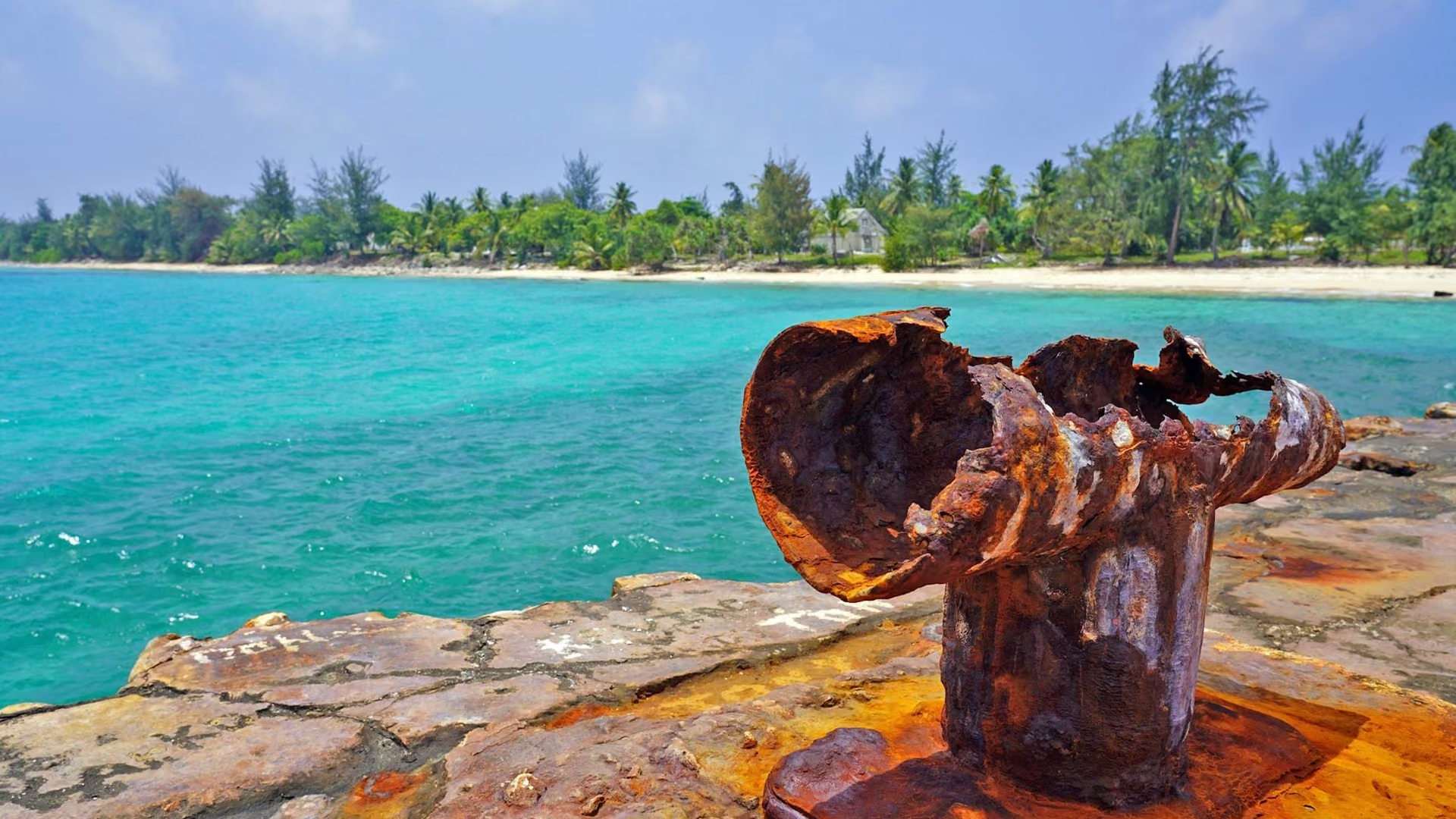
Tropical climates destroy steel faster than almost anywhere else on Earth.
Heat, humidity, salt air, fungus, acidic rain, and constant condensation attack metal day and night. In coastal jungle regions, untreated steel can begin rusting within hours.
If modern coatings and industrial paints are unavailable, you can still protect tools, hardware, roofs, blades, hinges, nails, farming equipment, and structures using:
- heat-curing oils
- charcoal carbonization
- pine resin and wax coatings
- limewash barriers
- sacrificial metals
- primitive galvanizing
- oil-blackening
- drainage design
- airflow engineering
The biggest secret is this:
In the tropics, preventing trapped moisture matters more than making a “perfect” coating.
A mediocre coating that dries quickly beats a strong coating that traps water.
Why Tropical Climates Destroy Metal
Temperate climates give metal time to dry.
Tropical climates do not.
In humid jungle or coastal regions:
- Night condensation forms daily.
- Salt accelerates electrochemical corrosion.
- Mold and organic acids attack surfaces.
- Rainwater remains trapped for long periods.
- Wood structures stay damp continuously.
- Air itself becomes conductive.
Near the sea, corrosion can become 5–10× faster.
This means:
- thin sheet steel fails rapidly
- bolts seize permanently
- nails disappear inside wood
- hinges freeze
- roofing perforates
- tools pit deeply
- springs weaken
- knives become rough and brittle
The solution is not one coating.
The solution is layers of defense.
The Jungle Hierarchy of Rust Protection
For remote off-grid conditions, prioritize protection methods in this order:
- Design against water
- Keep airflow everywhere
- Use thick steel
- Blacken or carbonize surfaces
- Apply drying oils
- Add wax or resin sealers
- Use sacrificial zinc when possible
- Avoid water traps entirely
This order matters more than expensive materials.
Rule #1 — Design So Water Cannot Stay
Most rust comes from trapped moisture.
Not rain.
Trapped moisture.
Avoid:
- closed steel tubes
- horizontal surfaces
- tight overlaps
- hidden pockets
- buried joints
- water-trapping bolt heads
Prefer:
- drainage holes
- sloped surfaces
- open airflow
- exposed fasteners
- raised foundations
- removable panels
In tropical climates:
If water can escape, steel survives.
If water gets trapped, steel dies.
Traditional Tropical Protection Methods
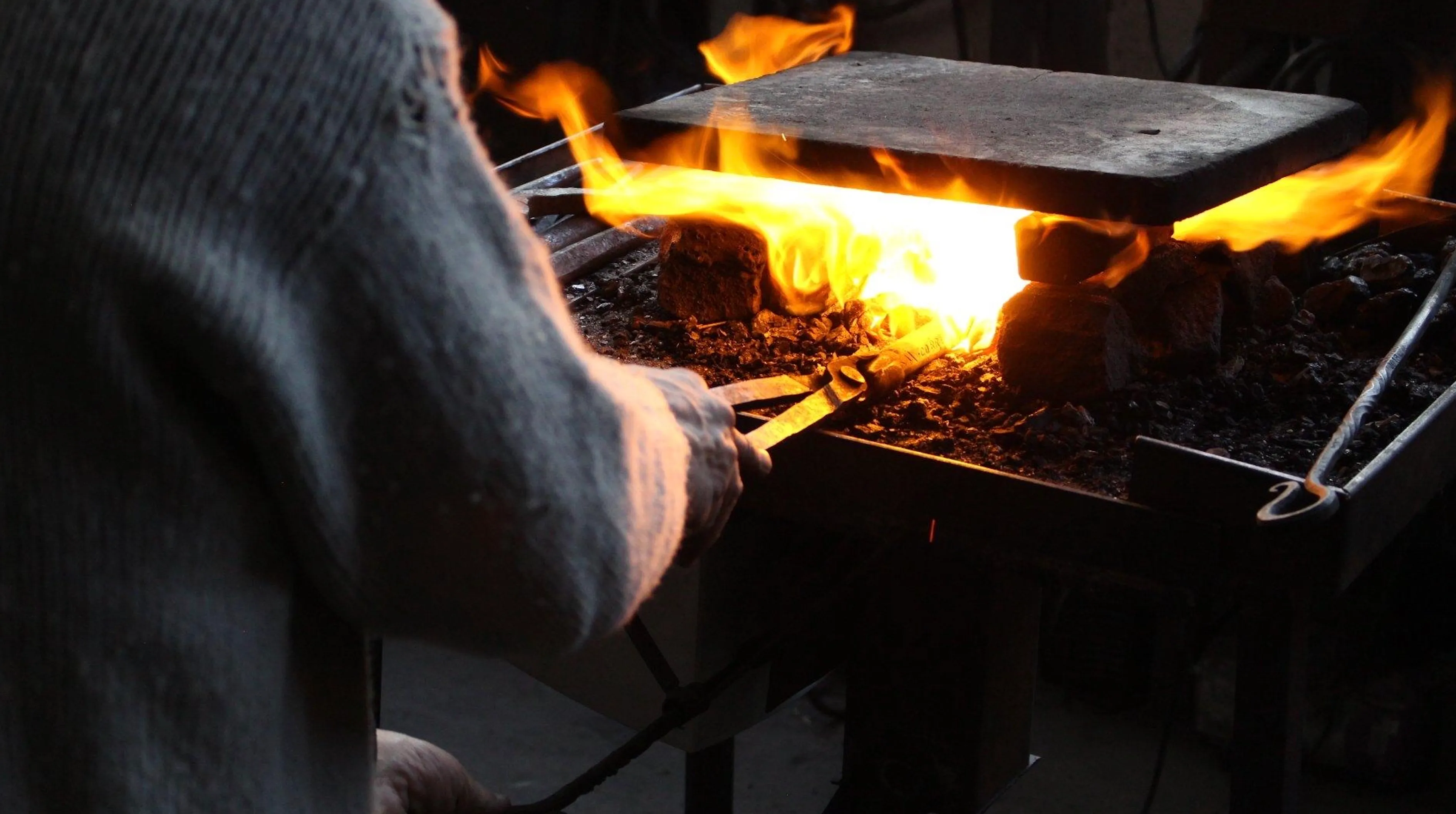
- Heat-Cured Oil Blackening
This is the most practical off-grid protection system.
Materials
- linseed oil
- tung oil
- neem oil
- castor oil (less ideal)
- wood fire
- steel brush
- cloth
Process
- Heat steel until warm but not glowing.
- Wipe thin oil layer.
- Reheat slowly.
- Oil polymerizes into hard dark coating.
- Repeat 3–6 times.
The surface becomes:
- darker
- hydrophobic
- partially carbonized
- more rust resistant
This works extremely well for:
- machetes
- knives
- farming tools
- hinges
- brackets
- nails
- chains
- stove parts
Not ideal for submerged metal.
2. Pine Resin + Wax Barrier
Very old maritime technique.
Recipe
- 2 parts pine resin
- 1 part beeswax
- small amount charcoal powder
- optional linseed oil
Heat gently until liquid.
Apply warm.
Excellent for:
- bolts
- threads
- tool storage
- hinges
- marine hardware
- roof fasteners
This mixture stays flexible.
That matters in tropical climates because rigid coatings crack.
3. Charcoal Carbon Black Coating
Fine charcoal helps block UV and moisture.
Mix:
- charcoal dust
- oil
- resin
- wax
Creates primitive black anti-rust paste.
This resembles ancient Japanese and Scandinavian protective finishes.
4. Limewash for Structures
Lime protects indirectly.
White lime coatings reduce:
- heat
- condensation
- fungal growth
- trapped moisture
Limewash surrounding structures dramatically improves metal lifespan.
Especially useful for:
- roofing supports
- barns
- workshops
- tropical sheds
Oil Choices in Tropical Regions
Best Options
Tung Oil
Excellent water resistance.
Hard finish.
Very durable.
Best overall if available.
Linseed Oil
Traditional.
Easy to produce.
Needs maintenance.
Can mold if left thick.
Must be heat-cured thinly.
Neem Oil
Interesting tropical option.
Less durable mechanically.
But naturally antifungal and insect resistant.
Very useful in humid jungle conditions.
Coconut Oil
Not ideal.
Can become sticky.
Can support mold growth.
Only useful mixed with resin or wax.
Protecting Roofs Near the Sea
Salt air destroys roofs rapidly.
Use:
- steep roof angles
- airflow beneath roofing
- sacrificial washers
- thick coatings
- regular rinsing with rainwater
Avoid:
- thin cheap sheet metal
- enclosed cavities
- permanent wet insulation
- touching dissimilar metals
Copper touching steel accelerates corrosion badly.
Aluminum touching wet steel also causes problems.
Maintenance Is Mandatory
In the tropics, every coating eventually fails.
Accept this.
The goal is maintainability.
A repairable system is superior to a permanent one.
Monthly Maintenance
- wipe tools with oil
- inspect rust spots
- clean salt deposits
- dry storage spaces
- improve airflow
Tiny repairs prevent catastrophic corrosion.
The Most Important Tropical Rule
Steel should never stay cold and wet overnight.
If possible:
- store tools indoors
- hang them vertically
- keep airflow moving
- avoid ground contact
- warm tools near fires occasionally
Even primitive drying dramatically increases lifespan.
Final Thoughts
Industrial civilization solved rust using chemistry.
Traditional cultures solved rust using:
- airflow
- heat
- oils
- carbon
- maintenance
- geometry
In remote tropical regions, those older methods become useful again.
Especially where supply chains fail.
Rust is not defeated once.
Rust is managed continuously.
And in the jungle, maintenance is survival.
Off-Grid Galvanizing for Coastal and Tropical Survival
TL;DR
Primitive off-grid galvanizing is possible.
Galvanizing protects steel using a sacrificial layer of zinc.
The zinc corrodes first.
That means the steel underneath survives dramatically longer.
This is one of the few anti-rust systems that still works even after scratches and damage.
For tropical coastal regions, galvanizing is often the best long-term solution.
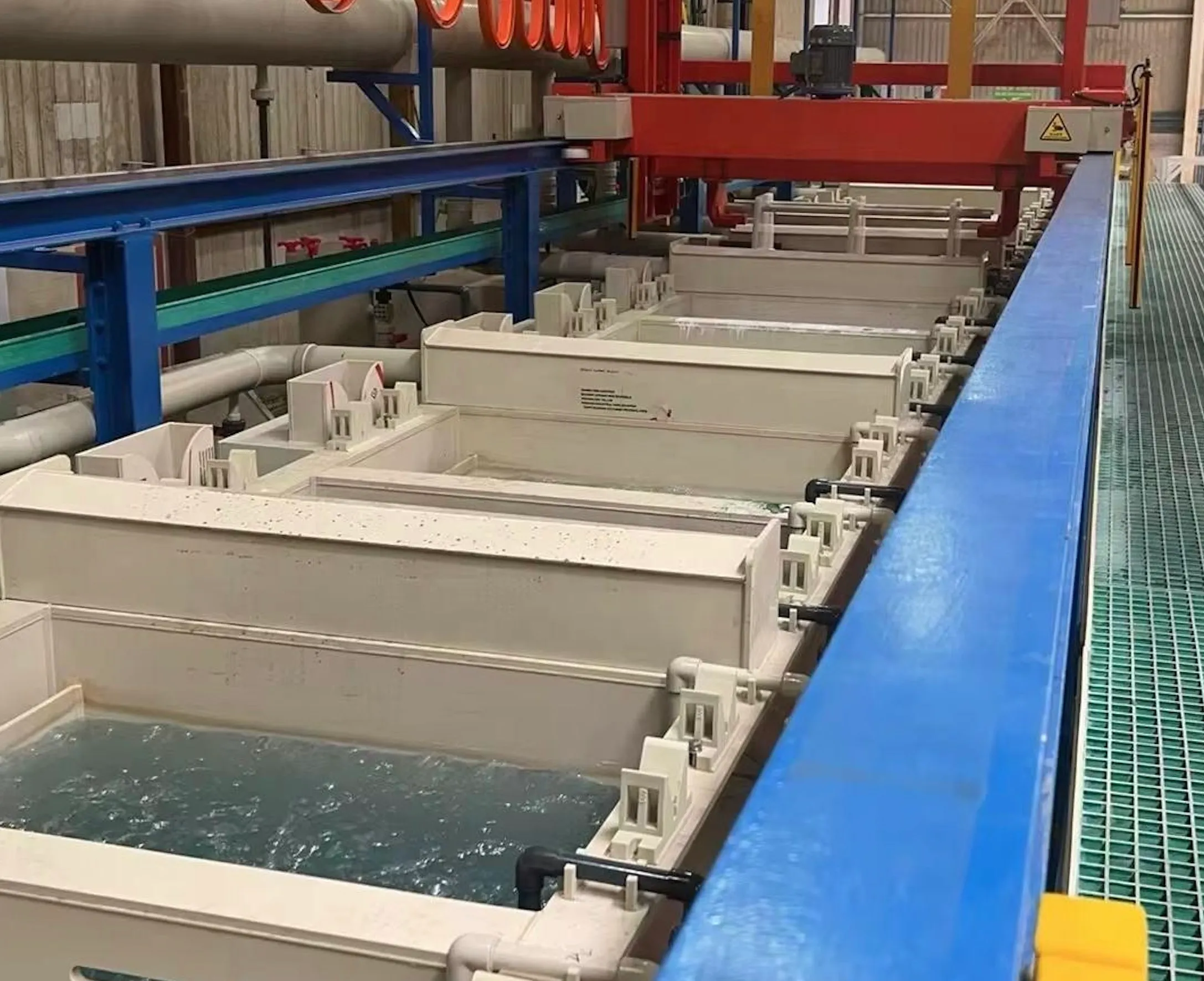
Primitive systems can use:
- zinc scrap
- battery zinc
- roofing zinc
- dry-cell zinc cans
- charcoal heat
- vinegar
- weak hydrochloric acid
- wood ash chemistry
- saltwater electrolysis
However:
- hot-dip galvanizing is dangerous
- fumes can be toxic
- acids require caution
- purity matters
- ventilation is essential
This article focuses on practical low-tech methods.
Why Galvanizing Works So Well
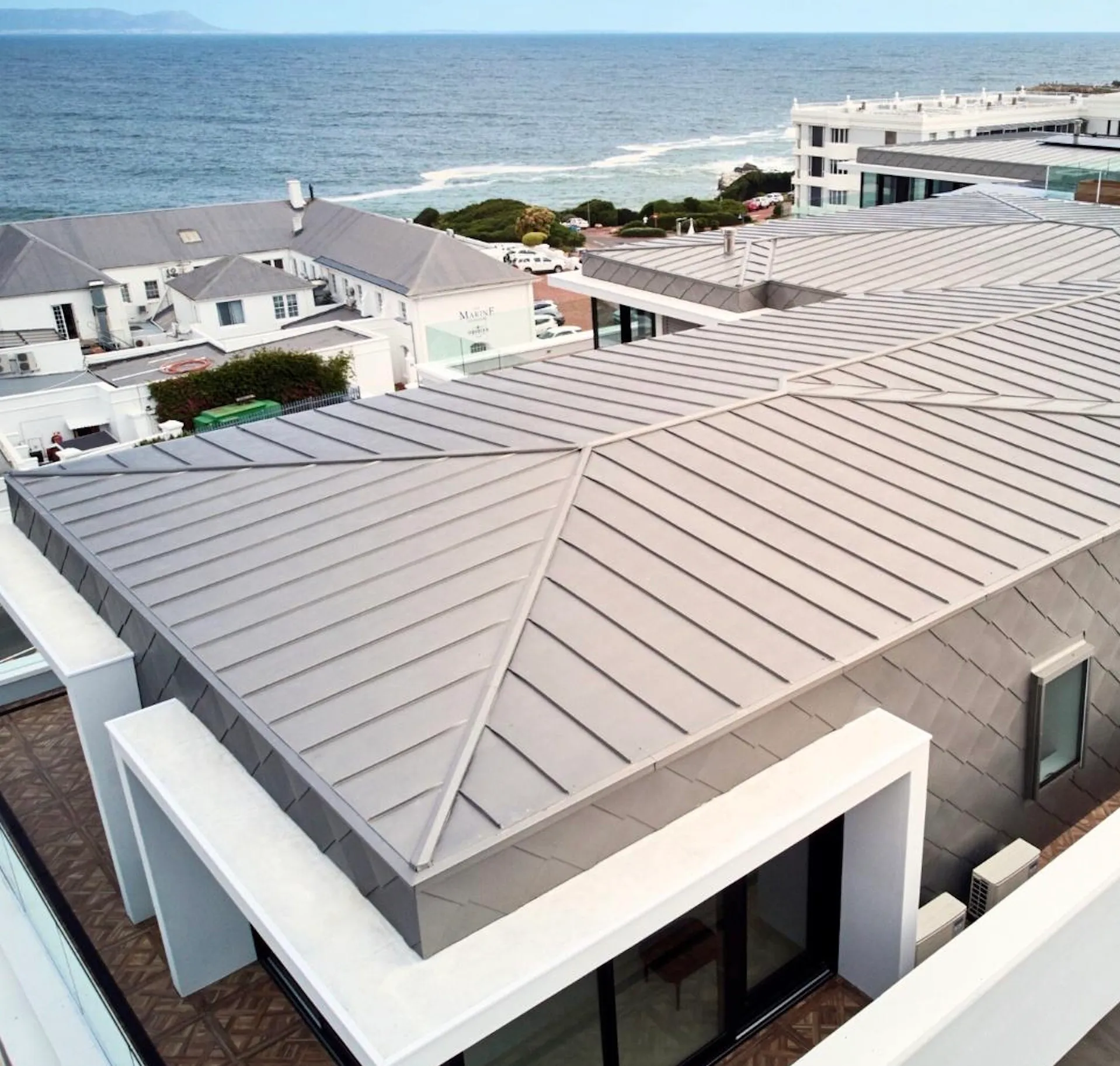
Zinc protects steel in two ways.
1. Barrier Protection
The zinc blocks oxygen and water.
2. Sacrificial Protection
Even if scratched:
- zinc corrodes first
- steel corrodes later
This is extremely important in:
- tropical climates
- marine air
- jungle humidity
- salty environments
Paint alone cannot do this.
The Three Levels of Off-Grid Galvanizing
Level 1 — Zinc-Rich Protective Paste
Easiest.
Most realistic.
No electricity required.
Materials
- powdered zinc
- linseed or tung oil
- resin or wax
- charcoal powder optional
How To Make Zinc Powder
Possible sources:
- old zinc roofing
- sacrificial anodes
- marine zinc blocks
- dry-cell battery shells
- galvanized scrap
File or grind carefully.
Avoid breathing dust.
Use
Mix into thick metallic paint.
Apply onto cleaned steel.
This acts similarly to modern cold galvanizing compounds.
Very effective.
Level 2 — Electro-Galvanizing
This is true zinc plating.
Requires:
- zinc source
- electrolyte
- electricity
But electricity can come from:
- solar panels
- hand generators
- batteries
- small wind systems
Primitive Electrolyte Recipes
Mild Vinegar Electrolyte
Materials
- white vinegar
- salt
- zinc pieces
Place zinc in vinegar overnight.
This creates zinc acetate solution.
Good beginner electrolyte.
Safer than strong acids.
Slow but usable.
Hydrochloric Acid Electrolyte
Stronger.
More dangerous.
Sources
- muriatic acid
- brick cleaner
- pool acid
React zinc slowly into diluted acid.
This forms zinc chloride.
Very effective galvanizing solution.
But:
- fumes are dangerous
- acid burns skin
- never inhale vapors
- always ventilate
Never use indoors.
Basic Electro-Galvanizing Setup
Needed
- plastic bucket
- zinc anode
- steel object
- electrolyte
- DC power source
Wiring
- zinc = positive
- steel = negative
Tiny bubbles should appear.
Zinc slowly plates onto steel.
Process may take:
- minutes for thin coating
- hours for stronger coating
Afterward:
- rinse
- dry completely
- optionally heat cure oil over zinc
This combination works surprisingly well.
Level 3 — Primitive Hot-Dip Galvanizing
Most powerful.
Most dangerous.
Industrial galvanizing uses molten zinc.
This requires roughly:
- 420–450°C molten zinc
- extremely clean steel
- flux chemicals
- temperature control
This is difficult but possible with charcoal furnaces.
The Biggest Problem: Surface Preparation
Galvanizing fails if steel is dirty.
Steel must be:
- oil free
- rust free
- oxide free
Industrially they use:
- degreasing
- acid pickling
- fluxing
- zinc dipping
Primitive Rust Removal Methods
Vinegar Soak
Slow.
Safe.
Good for small parts.
Citric Acid
Excellent option.
Can come from:
- citrus waste
- powdered citric acid
Less dangerous than hydrochloric acid.
Weak Hydrochloric Acid
Fast and effective.
But dangerous.
Always neutralize afterward using:
- baking soda
- limewater
- wood ash water
Never leave acid residue.
Primitive Fluxes
Flux helps zinc bond.
Traditional/simple options:
- ammonium chloride
- zinc chloride
- rosin
- borax blends
The simplest field approach:
zinc chloride solution made from zinc + hydrochloric acid.
This is very similar to old soldering flux.
Important Safety Warning — Zinc Fumes
Overheated zinc creates toxic fumes.
This causes:
- metal fume fever
- nausea
- headaches
- lung irritation
Never breathe zinc smoke.
Always work:
- outdoors
- with wind
- away from living spaces
Do not overheat galvanized metal in enclosed areas.
Best Tropical Strategy
For realistic off-grid coastal survival:
Best Combination
- electro-galvanize
- heat-cure thin oil layer
- wax threaded parts
- maximize airflow
- avoid trapped moisture
This outperforms paint alone.
Stainless Steel vs Galvanized Steel
People assume stainless is always superior.
Not necessarily.
Cheap stainless can fail badly near saltwater.
Good galvanized steel often survives longer than poor stainless.
Especially if maintained.
Sacrificial Zinc Blocks
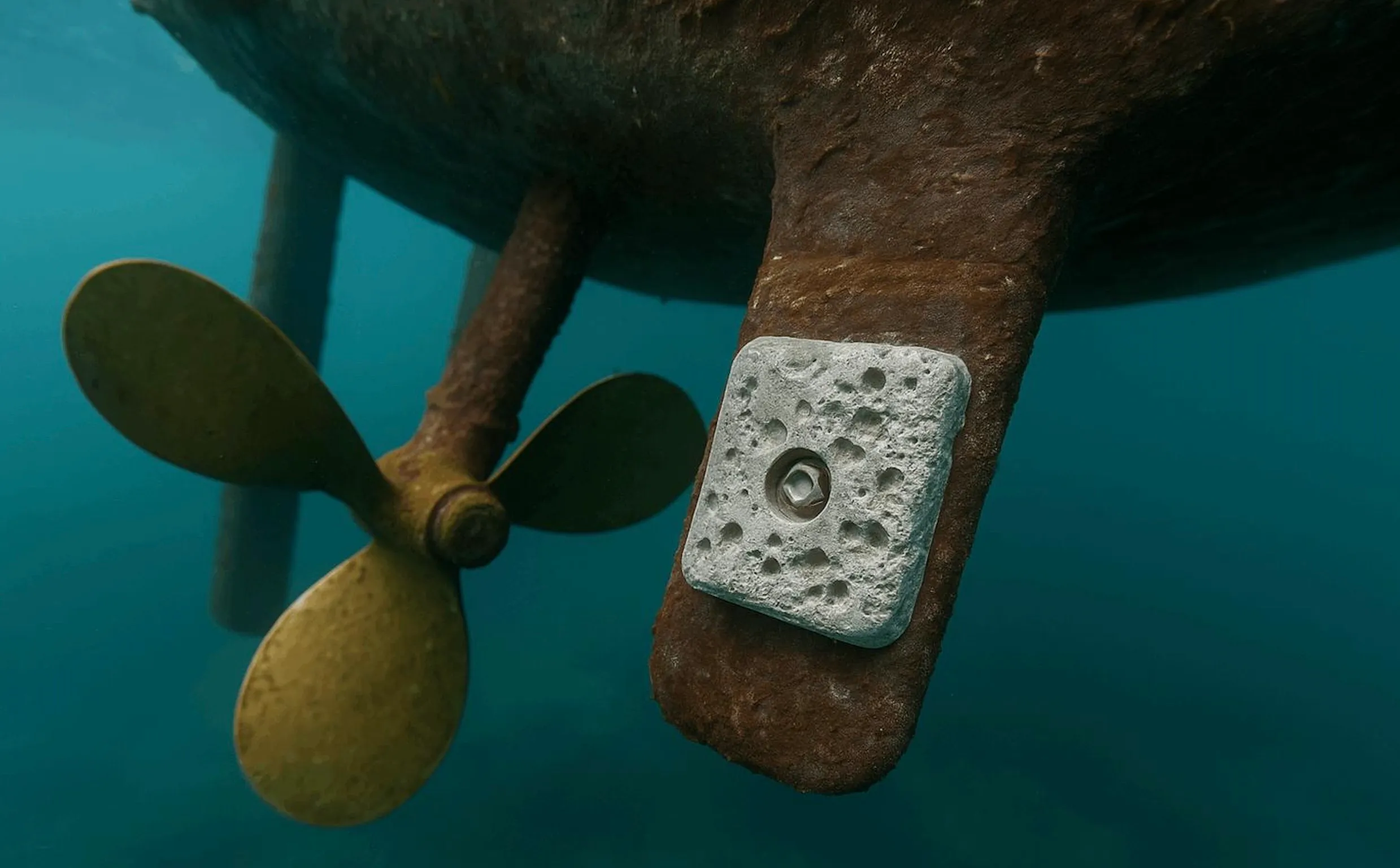
Extremely useful near the sea.
Boats use sacrificial zinc anodes.
These intentionally corrode first.
Primitive systems can attach zinc blocks to:
- docks
- water tanks
- steel frames
- marine hardware
The zinc slowly sacrifices itself.
Very powerful concept.
The Real Secret
Ancient and modern anti-rust systems share one truth:
Corrosion is electrochemistry.
You are either:
- blocking oxygen
- blocking water
- blocking conductivity
- or sacrificing another metal first
Galvanizing works because zinc volunteers to die before steel.
That single principle has protected ships, bridges, roofs, towers, and tools for over a century.
And with simple chemistry, it can still be done far from industrial civilization.
Know More Links:
Corrosion Protection for Steel (American Galvanizers Association)
Barrier and Sacrificial Protection (Galvanizers Association UK
Guide to protection of steel against corrosion